Did Garth Brooks Just Discover the Cure For ‘Blue Dot Fever’?
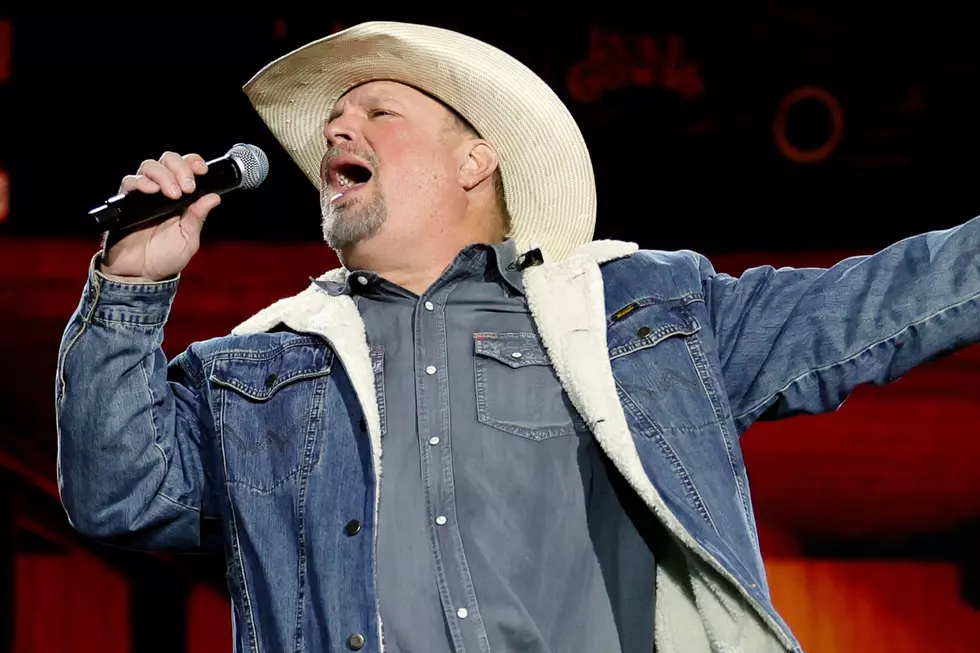
It shouldn't be a surprise to anyone that Garth Brooks — the artist who seems to exclusively reveal news through his website, and who exclusively streams his music through Amazon and keeps it off mainstream platforms such as Spotify and Apple Music — chose an unconventional roll-out plan for the dates on his 2026 Blame It All On My Roots Arena Tour.
It also shouldn't be a surprise that Brooks — who's among the most popular artists in country music history — draws a big crowd, with several Blame It All On My Roots dates sold out or nearly there.
Read More: Garth Brooks' Arena Tour: Here's Everything We Know
The question is: Are the two points related?
In other words, has Garth Brooks cracked the code for how to sell tickets at a time when artists, even major artists, are struggling to sell tickets to their shows?
What Is Blue Dot Fever?
"Blue Dot Fever" is an Internet-coined term for systemic low ticket sales. It's named for the "blue dots" on Ticketmaster's website that signify a show's empty seats.
- A plausible explanation for Blue Dot Fever is the over-saturation of the touring market after the post-pandemic boom of 2022 and 2023.
- On top of that, widespread gas price hikes and global instability mean that cost of living and transportation costs are way up.
- As a result, we've seen an uptick both in concert prices and in fans who are unable to afford tickets.
It affects artists of all genres, and tours that are both domestic and international. The Pussycat Dolls and The Black Keys are two artists who've explicitly said they canceled their tours due to low ticket sales. Several more — including Post Malone and Jelly Roll, Meghan Trainer, Neil Young, Bailey Zimmerman and Zayn Malik —canceled tours or entire legs of tours, but didn't name ticket sales as a factor in their decision.
Read More: Country Artists Who Canceled Multiple Shows Or Whole Tours in 2026
On top of the artists who've scrapped entire runs are those who canceled multiple tour dates. Kacey Musgraves is one star from the country genre who had fans wondering if low ticket sales were the reason why she pulled the plug on three Middle of Nowhere Tour dates. Others, like Justin Moore, took time off the road this summer, though he explained that he went to rehab and got sober during his time offstage.
Did Garth Brooks Discover the Cure For Blue Dot Fever?
He certainly switched up his tour date roll-out strategy in a way that may have helped drum up ticket sales.
The most obvious change is Brooks' decision to announce shows one at a time, instead of all in one batch. That gives each city its stand-alone moment in the news cycle, and its own on-sale date. Fans notice when the first-announced shows sell out, and pull the trigger on subsequently-announced show tickets with more urgency.
Read More: Why Chicago Means So Much to Garth Brooks
But that's not the only thing Brooks did differently with this tour. He had four other major strategy points working in his favor.
- Personal Connection to Each City: When Garth Brooks announced each show, he also reminisced about the big career moments he's had in that city in the past. That makes every date feel extra important.
- Nostalgia: The Blame It All On My Roots Tour is a throwback to his '90s days. He's playing arenas — not stadiums — reviving the drum pod and focusing on a set list full of hits. Fans tend to want to hear their old favorite songs onstage over new material.
- The Price Is Right: Speaking of throwbacks, these tickets are some '90s prices. Brooks capped all tickets at around $155 including fees. Compared to some other country concerts (ahem, Kid Rock and the $5,000 front row ticket), that's a bargain people are willing to open their wallets for.
- Novelty: The last time Brooks mounted a full-scale tour was in 2022, and that was a stadium tour. Lots of fans either haven't seen him live in an arena setting, or haven't seen him that way for a while. His live presence isn't oversaturated, and that justifies a ticket purchase.
There's an argument to be made that Garth Brooks is, well, Garth Brooks, and so his tickets would have sold no matter how he announced his tour.
But the factors listed above certainly sweetened the deal. Breaking the roll-out up into multiple announcements mean more people will see that Brooks is touring, and each city on the tour is getting their own moment to drum up interest locally. Nostalgia and affordability are two tried-and-true draws to any country concert. And with a live market that's been oversaturated in the years since the COVID-19 pandemic, it helps when an artist doesn't tour too much or too often.
Could Other Artists Cure Their Blue Dot Fever Using Garth Brooks' Strategy?
It's certainly an intriguing thought. But we suspect that a lot of artists, especially smaller artists, would run into some trouble if they tried to adopt this plan.
Brooks has the luxury of having had a record-breaking, mega-popular '90s career to wax nostalgic about. Most touring artists don't have a past illustrious enough to build a whole tour around remembering.
Read More: The Best '90s Coutry Songs
Same goes for Brooks' personal connections to each city. Sure, if you happen to have been crowned the top-selling album artist of all time at a ceremony in Washington, D.C., that'll probably help you sell some tickets there during your next show. But how many artists have something like that remember, especially in multiple cities?
Keeping ticket prices low and avoiding over-saturation are two more tactics that work great when you're one of the biggest artists in the genre, but younger stars, who depend on touring for day-to-day income and brand-building, don't have as much control over how often they tour or how much their tickets sell for.
We've even seen artists as big as Zach Bryan try and fail to change the way their ticket sales work. When you're a Garth-level artist, you have a lot of say-so about the rollout of your tours. That won't apply to 95 percent of touring acts.
Read More: Zach Bryan Returns to Ticketmaster After Boycotting the Site
The tactic of announcing shows one at a time has more potential.
Brooks' strategy of drumming up excitement one city at a time could likely work for most artists, even on a smaller scale. At the very least, it would allow artists to get an early assessment of how well their tickets are selling and calibrate (or cancel) future shows before they're announced.
There are a few, larger artists that seem like natural fits for the approach. Luke Combs, who just announced a full tour on Thursday (Aug. 13) is easily big enough to generate a lot of interest with a city-by-city announcement.
Morgan Wallen is too, and a focus on individual cities would play into his already-successful tradition of walking out each night with a celebrity tied to the town where he's playing.
Carrie Underwood seems uniquely positioned to tour this way, since she doesn't tour often and there's a big demand for tickets to her concerts. With 20 years under her belt, including a fan-favorite American Idol career, she's also got the nostalgia factor in her corner. We think she could be especially successful adopting this method.
But all these stars are artists who were never especially susceptible to blue dot fever to begin with. The newer and middle-of-the-road touring acts would reap fewer benefits. And if everybody started announcing tours one city at a time? Well, those artists with quieter careers might just get lost in the shuffle, and their on-sale dates forgotten.
2026 Country Music Festivals Guide
Gallery Credit: Billy Dukes

More From Kicks 105